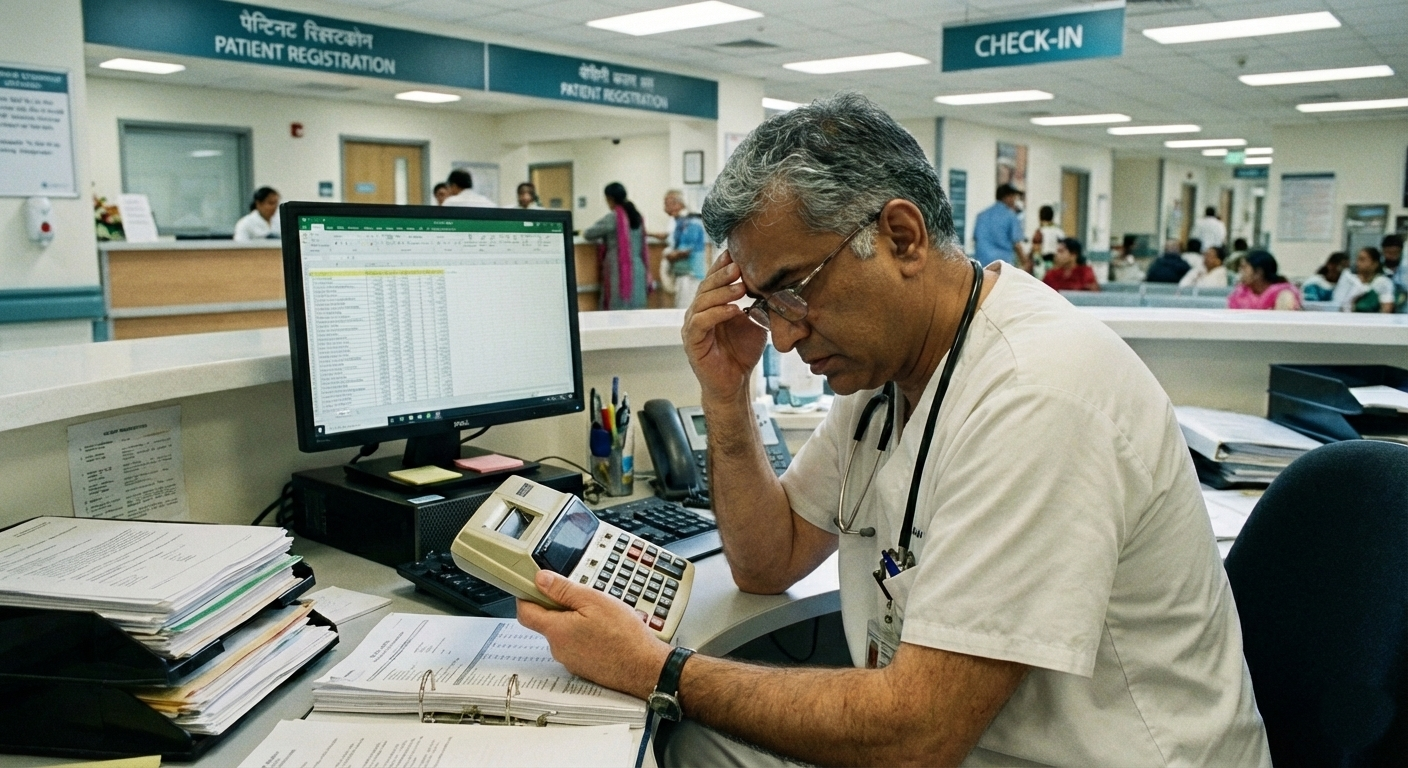
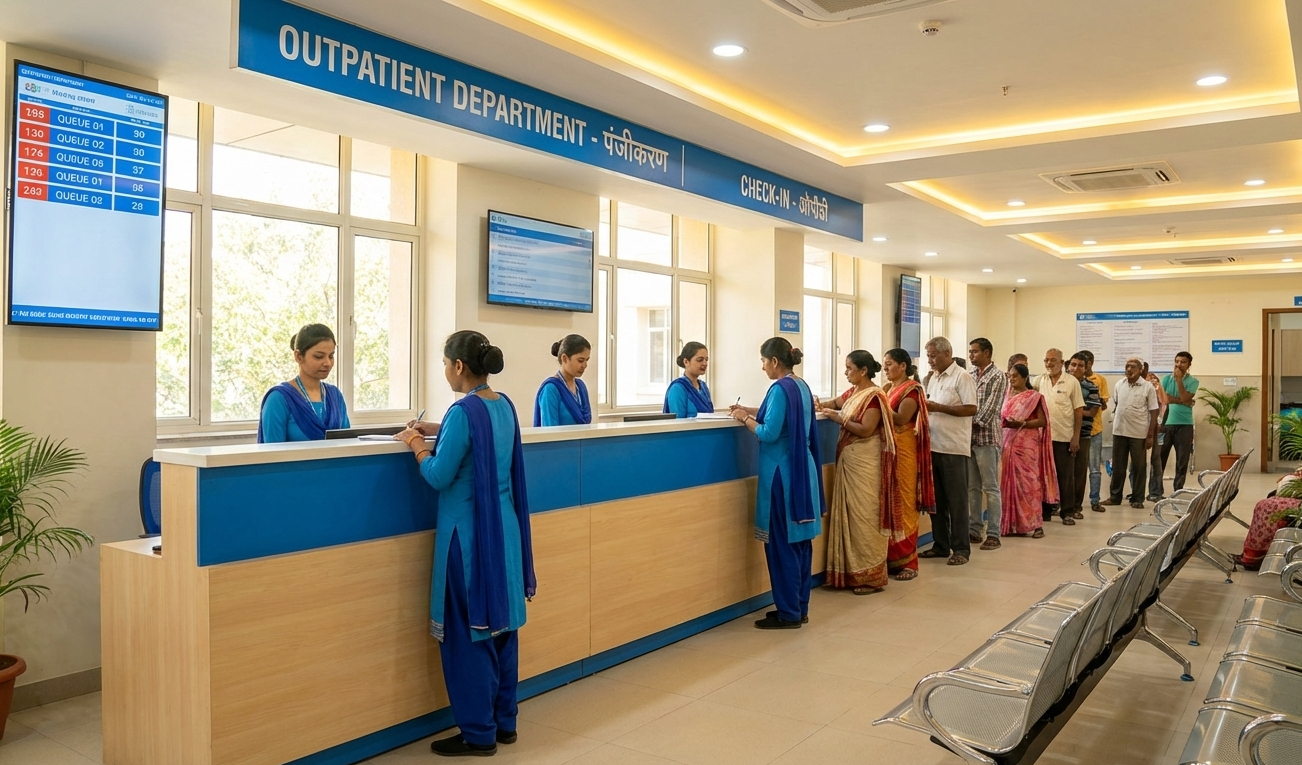
Managing a busy Outpatient Department (OPD) in India often feels like controlled chaos, with patients spending an average of 59 minutes per visit—84% of which is spent waiting. For solo practitioners and multi-specialty clinics, these delays bleed into revenue and staff morale.
By implementing these three core strategies and one automation bonus, you can shave 15–25 minutes off every consultation cycle.
Step 1: Shift Registration to "Pre-Arrival"
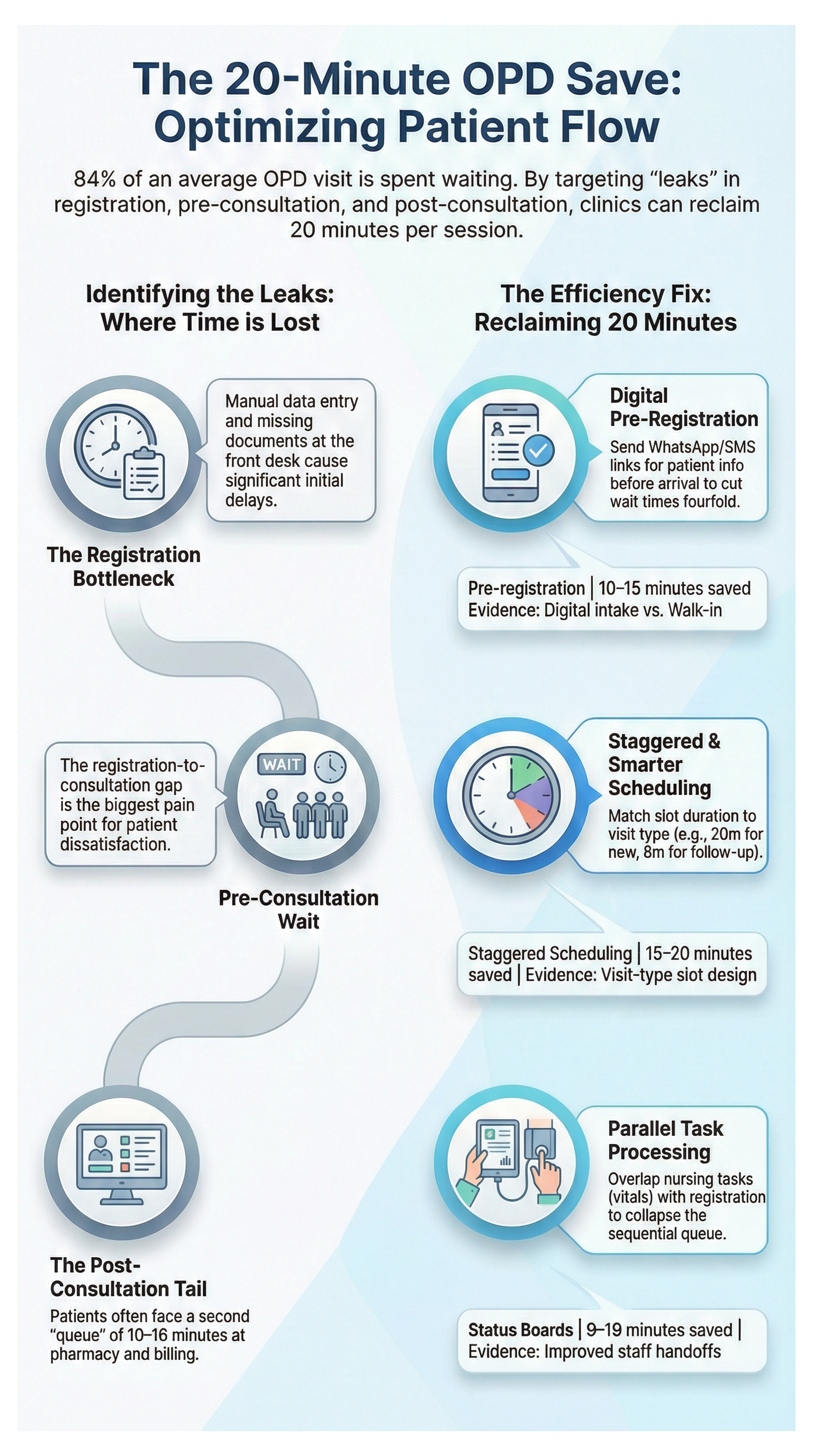
The registration desk is a primary bottleneck due to manual data entry and missing documentation. Moving this process online before the patient arrives dramatically compresses front-desk time.
- The Impact: Patients who pre-register online have a median wait of 15 minutes, compared to 60 minutes for walk-ins. Furthermore, digital tools can cut check-in time by approximately 50%.
- Actionable Tip: Send a WhatsApp or SMS link a day before the appointment to collect Aadhaar/ABHA details and chief complaints so the front desk only needs to verify, not collect, the data.
Step 2: Adopt Staggered, Type-Based Scheduling
Many Indian OPDs suffer from a "10 a.m. crush" caused by first-come-first-served models. Staggering arrivals based on the complexity of the visit prevents the waiting room from overflowing.
- The Impact: Staggered scheduling has been shown to reduce wait times by 15–20 minutes on average and can cut total waiting time by over 60%.
- Actionable Tip: Separate your slots by visit type. Schedule complex new cases in 20-minute blocks and routine follow-ups in 8–10 minute blocks to maintain a steady flow.
Step 3: Use Real-Time Status Boards for Handoffs
Time leaks most often occur between steps (e.g., waiting for vitals or billing) rather than during the consultation itself. A visual tracker ensures the front desk, nurses, and doctors stay aligned on a patient's progress.
- The Impact: Implementing a status board to mark each step can reduce median cycle time by 18–21%. The biggest gains come from improving handoffs between staff members.
- Actionable Tip: Use a digital dashboard such as our visual queue system to categorize patients into stages: Waiting → Vitals Done → Ready for Doctor → With Doctor → Billing.
Bonus: Reduce No-Show Chaos with Automation
No-shows create unpredictable gaps that lead to "bunching" when walk-ins fill the slots. Automated reminders stabilize the schedule and reduce last-minute rescheduling scrambles.
- The Impact: Consistent reminders via SMS or WhatsApp lead to a steadier patient flow and more predictable daily revenue.
- Actionable Tip: Set up automated reminders for 48 hours before and the morning of the appointment, including a "Confirm/Reschedule" option to help you backfill cancellations early.
Modernizing your clinic workflow doesn't have to be a manual burden. While these steps can be piloted with paper and whiteboards, AI-driven healthcare platforms like Arogyam.AI are designed to integrate these features—from digital pre-registration to automated reminders—directly into the Indian clinical workflow.
If you are looking to reclaim your time and improve patient satisfaction, exploring how AI-driven tools can automate these "Clinic Ops" might be the next step for your practice.