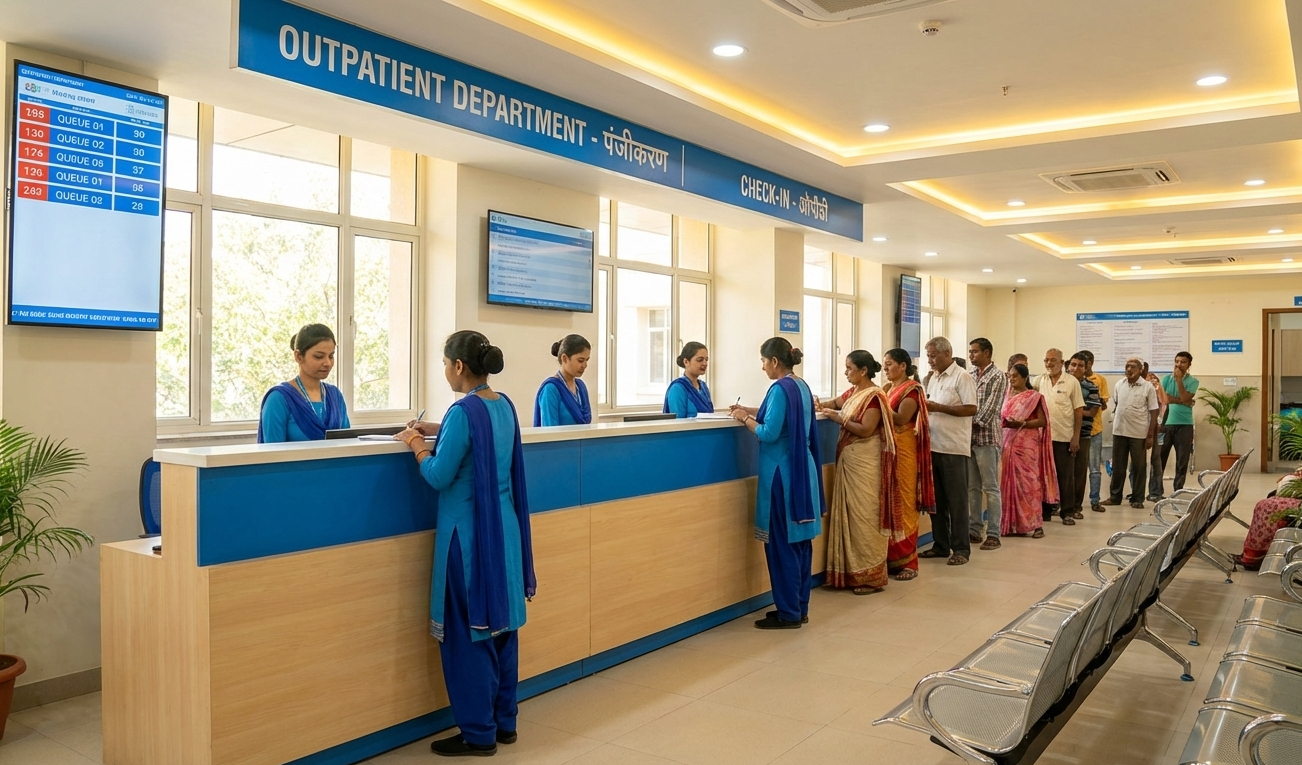
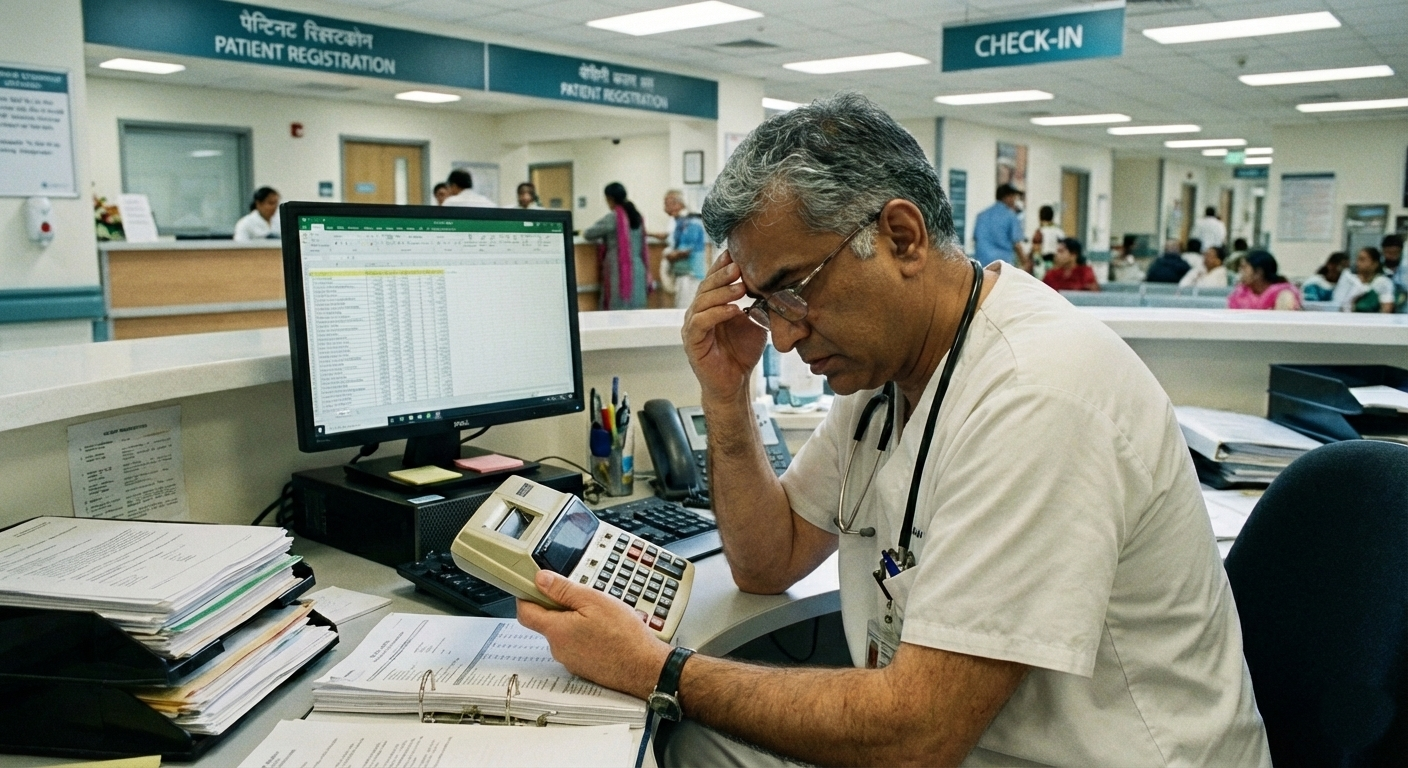
Most OPDs in India are "busy" but still leak time, money, and energy. Let's look at simple ways to estimate that loss and a few practical moves to shrink it.
The Idea: Chaos Cost in Plain Language
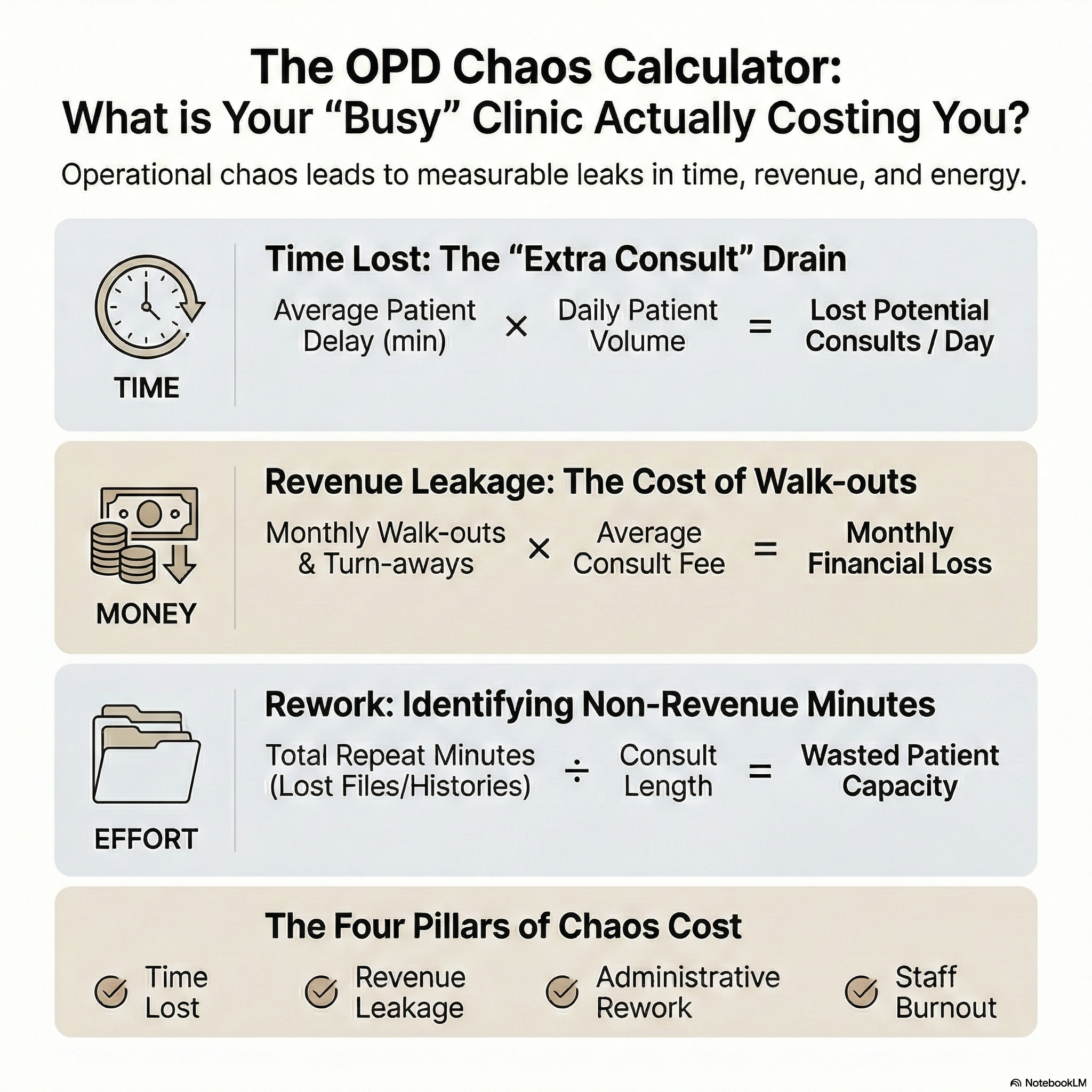
You can think of OPD chaos cost as four things:
- Time lost - Running late, unnecessary waiting
- Revenue leakage - Walk-outs, turn-aways
- Rework - Doing the same work twice
- Burnout - Doctor and staff fatigue, churn
Even rough numbers here are enough to decide what to fix.
A Very Simple "OPD Chaos Calculator"
You can do this in 10 minutes with a pen, or later in a spreadsheet.
1. Time Loss Per Day
Formula:
- Average delay per patient (minutes): D
- Patients per day: N
- Time lost per day ≈ D × N minutes
Now divide by your typical consult length (e.g., 10–15 minutes) to see how many extra consults' worth of time you're losing.
Example: If each patient waits 5 extra minutes and you see 40 patients daily:
- 5 × 40 = 200 minutes lost (about 13-20 potential consults)
2. Walk-outs and Turn-aways
Formula:
- Walk-outs per day (leave due to long wait): W
- Turn-aways per day ("come tomorrow"): T
- Average consult fee: F
- Monthly leakage ≈ (W + T) × F × working days
Example: Even 2 patients/day at ₹600 is ~₹26,000/month in lost revenue.
3. Rework Time
Formula:
- Minutes per day spent repeating work (lost files, repeat history, chasing reports): R
- Rework consults per day ≈ R ÷ consult length
That's how many extra patients' worth of time you burn without extra revenue.
💡 Key Insight
You don't need precise values. The moment the numbers feel uncomfortable, you've got your "why change" story.
Five Strategies to Shrink Chaos
Strategy 1: Make Every Minute Traceable
For one week, note basic timestamps for each patient:
- Arrival
- Registration done
- Vitals done (if applicable)
- Doctor consult start
Then ask:
* Where is the biggest gap?
* Is it worse at certain times of day?
Even this one-week snapshot tells you whether the main issue is front desk, vitals, or doctor bottleneck.
💡 Pro Tip: A digital system can capture these timestamps automatically over months, instead of you doing manual audits.
Strategy 2: Standardize Your OPD Journey
Write down one standard path, e.g.:
Registration → Vitals → Waiting → Doctor → Billing → Pharmacy/Next steps
Clarify:
* Who owns each step?
* What happens if a patient is late or a report is missing?
Print this and keep it at the front desk and nursing station. Software can later enforce this flow and reduce "we forgot" moments, but the clarity begins on paper.
Strategy 3: Keep Patient Information in One Place
Decide on a single "home" for patient info:
Paper clinic:
* One file per patient
* Consistent location
* Basic cover sheet (key problems, allergies, next review date)
Digital clinic:
* One screen/timeline that shows visits, notes, prescriptions, and reports
The aim is simple: Stop losing time hunting for information or repeating questions.
AI-driven software like Arogyam.ai will make that single source of truth effortless.
Strategy 4: Shape Demand, Don't Just React
Even a loose appointment structure beats pure walk-in chaos:
- Separate new vs follow-up slots
- Keep a few "urgent" slots each session
- Set clear but polite rules for late arrivals and no-shows
You can run this from a diary or spreadsheet. Adding reminders and slot logic in software later just makes it more consistent and less person-dependent.
Strategy 5: Give Your OPD a 30-Minute Review Every Month
Once a month, sit with your team and quickly discuss:
- Did delays feel better or worse this month?
- Did we notice more walk-outs or complaints?
- What's one small change to test next month?
If your visits and basic events are logged digitally, this review becomes a quick look at a screen, not a debate based on memory.
Where Arogyam Can Quietly Help
You can run everything above with notebooks and discipline.
A product like Arogyam simply:
✅ Captures timestamps and flows in the background
✅ Keeps patient info in one place
✅ Enforces the OPD journey you define
✅ Surfaces simple metrics (wait times, patterns, no-show trends) without extra effort
Ready to Measure Your Chaos Cost?
If you'd like a simple OPD chaos calculator or want to see how this looks inside a digital flow, we're happy to walk you through what we're building at Arogyam.
Start by measuring. Then decide where to act. The cost of chaos is real—but so is the benefit of reducing it, even by just 10%.
Looking to optimize your clinic operations? Learn more about Arogyam.ai and how we help Indian clinics reduce OPD chaos.